

 Main menu


What Is a Data Center? A Complete Business Guide for 2026

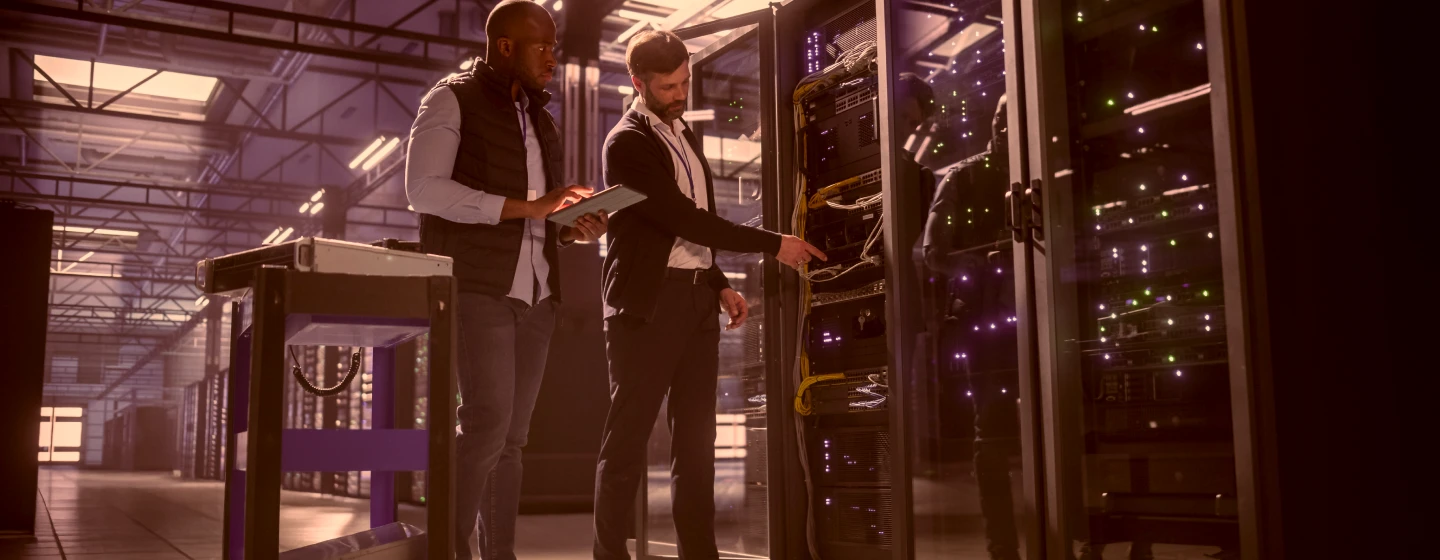
Every bank transfer that clears in seconds, every video call, and every query to a business system physically passes through a data center. It's the facility where a company's digital operation lives, and where it's decided whether that operation stays available or goes down. Understanding what a data center is, how it's classified, and what to check before contracting one is no longer a technical detail you can delegate away: it defines how far a business can grow and how well it responds when demand spikes.
Demand for this infrastructure is surging across Latin America. According to JLL, the region's colocation data center inventory reached 1.1 gigawatts of installed capacity in 2025, up 20% from the previous year, driven by cloud, artificial intelligence, and digital services. At Liberty Networks, we support that growth with a data center network and infrastructure built for the whole region.
What is a data center, and what is it for?
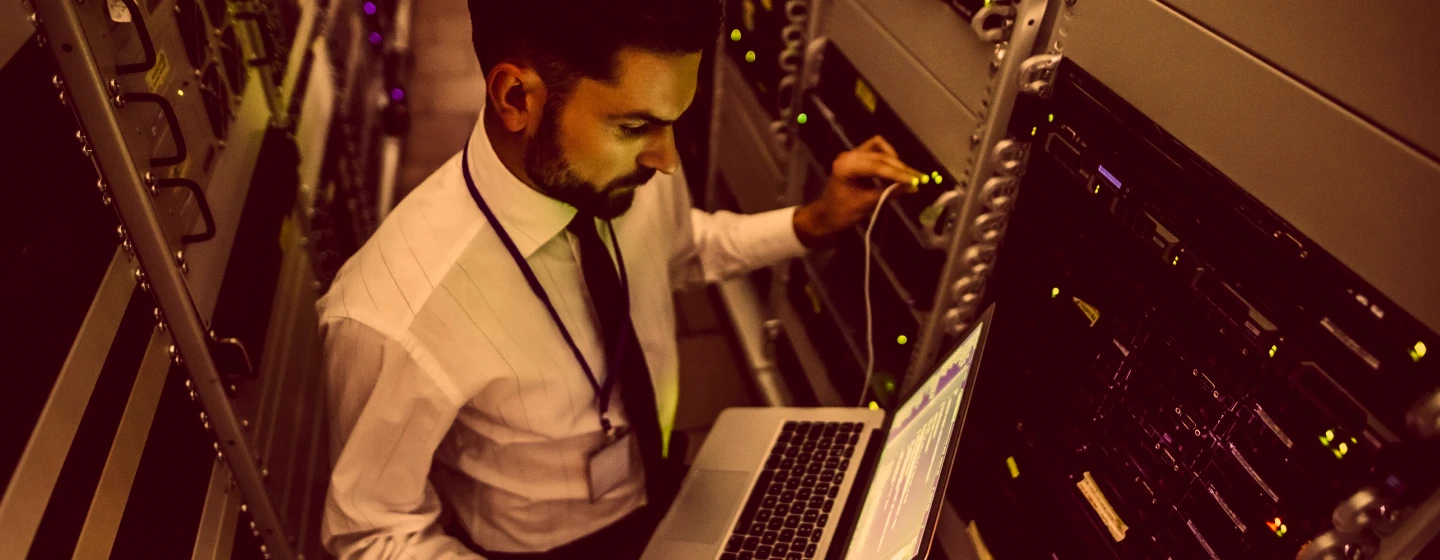
A data center is a facility designed to centrally house an organization's servers, storage systems, and network equipment, with the power, cooling, security, and connectivity conditions that equipment needs to run without interruption. It isn't a room with some servers in it: it's a purpose-built structure where every subsystem is designed to keep a business's critical applications available even when something fails.
Its function is easy to state and hard to guarantee: keep data and services accessible at all times. And the cost of failing to do so is high. According to the Uptime Institute's annual outage analysis, one in five companies that suffered an outage with financial impact reported losses exceeding three million dollars, and the number one cause remains power failure, not a network problem. Migrating operations to a professional data center is, at bottom, buying predictability against that risk.
The systems that keep the operation running
A data center is better understood through its systems than through its appearance. Four of them define its real capacity:
- Power. Redundant electrical feeds, battery backup units (UPS), and generator plants with enough fuel to sustain the load for hours or days. It's the subsystem responsible for the most outages when it fails.
- Cooling. Precision climate control that removes the heat generated by thousands of servers. Without continuous cooling, equipment shuts down from overheating within minutes.
- Connectivity. Multiple fiber-optic routes to different providers, so that the failure of one link doesn't cut the facility off from the outside world.
- Physical security. Biometric access control, video surveillance, perimeter protection, and round-the-clock monitoring, because availability also depends on who can physically reach the equipment.
How is a data center classified? Uptime and TIA-942 standards
When a provider claims its facility offers high availability, it's worth asking which standard that claim is measured against. Two internationally recognized frameworks exist, and both classify facilities into four levels.
The first is the Tier system from the Uptime Institute, the most widely cited in the industry. It runs from Tier I to Tier IV, with each level building on everything from the one below it and adding more redundancy. One key detail for evaluating sales claims: a facility cannot self-certify. Official certification requires review by the Uptime Institute itself, first of the design and then of the construction, and the number of sites genuinely certified worldwide is small compared to the number of providers who use "Tier" language informally.
The second is the ANSI/TIA-942 standard from the Telecommunications Industry Association. Its current version, Revision C, published in May 2024, incorporates changes aimed at the compute density that AI and edge computing bring, and covers the full physical infrastructure: site location, architecture, electrical and mechanical systems, telecommunications, fire protection, and security.
What does each tier mean for availability?
The difference between one tier and the next can look marginal on paper, but it translates directly into the kind of operation each one can support:
| Tier | Key characteristic | Availability | Typical use profile |
|---|---|---|---|
| Tier I | Basic capacity, no redundancy | 99.671% (≈28.8 h/year) | Non-critical workloads |
| Tier II | Redundant components (N+1) | 99.741% | SMBs, moderate workloads |
| Tier III | Concurrently maintainable, multiple paths | 99.982% (≈1.6 h/year) | Businesses with 24/7 operations |
| Tier IV | Fault tolerant (2N), continuous cooling | 99.995% (≈26 min/year) | Banking, mission-critical systems |
Source: Uptime Institute, Tier Classification System.
The takeaway for decision-makers is direct. A Tier III facility can perform maintenance on any component without shutting down operations, which covers most businesses running always-on online services. A Tier IV facility adds fault tolerance: when a piece of equipment fails or a path is interrupted, the operation never even notices. That level is justified in banking, in high-volume financial systems, and anywhere an outage carries an immediate regulatory or reputational cost.
Data center models: on-premise, colocation, and cloud
Having access to a data center doesn't mean you have to build one. Today, a company mainly chooses among three paths, and the decision hinges less on technology than on which cost and control model fits best.
On-premise data center
The company builds and operates its own facility. It offers full control over equipment and data, but it also concentrates all the cost and risk: land, power, specialized staff, technology refreshes, and the responsibility for maintaining availability. For most mid-sized organizations, building and certifying a Tier III facility of their own doesn't compete on cost with the alternatives.
Colocation
The company places its equipment in a third party's data center and rents space, power, and connectivity. It keeps control over its servers and data but shifts the burden of operating the building, redundant power, cooling, physical security, and certifications, to the provider. It's the middle ground many companies adopt when they need Tier III standards without the capital outlay of building them. Given its importance, this model deserves its own analysis, which the blog covers in a dedicated article on colocation.
Cloud and hybrid infrastructure
The company consumes compute and storage as a service, with no equipment of its own, paying by usage. In practice, most organizations end up in a hybrid setup: sensitive or regulated workloads in colocation or on-premise, and elastic workloads in the cloud. That mixed model is exactly what makes enterprise connectivity decisive: a robust data center doesn't count for much if the link connecting it to your sites and to the cloud isn't held to the same standard.
What to evaluate when choosing a data center
The regional market has transformed in recent years, driven by nearshoring and demand for digital services. That context matters, but the decision comes down to five concrete criteria that apply to any operation:
- Certified level, not just claimed. Ask for the Uptime or TIA-942 certification in writing. A Tier level mentioned in a sales proposal is not the same as one that has been audited.
- Location and risk. Seismic zone, flood exposure, proximity to the power grid and to fiber routes. The site is the one factor you can't redesign later.
- Connectivity and carrier neutrality. A facility that lets you connect with multiple network providers avoids single-provider lock-in and improves redundancy.
- Total cost of ownership. Price per rack or per kilowatt is only part of the picture. Add in the cost of connectivity, migrating your current infrastructure, a possible future provider switch, and the impact of an outage not covered by the SLA.
- Regulatory compliance. If the operation handles personal data, the data center must support the physical and technical security measures required by the data protection regulations that apply in each country.
This last point deserves specific attention. Most countries in the region have personal data protection laws that require companies to apply controls over the information they process and to demonstrate compliance to the relevant authority, and several of these regulations have been reformed or tightened in recent years. Where and how that data is hosted stops being an IT decision and becomes a compliance one, with direct regulatory and reputational impact.
The data center as a business decision
Choosing data center infrastructure has less to do with buying equipment and more to do with defining how much operational risk an organization is willing to absorb. The availability level it needs, the cost model it can sustain, and the regulations it must meet are the three questions that should drive the decision, in that order.
The natural next step for an IT team is to map its current workloads by criticality and identify which ones require Tier III or higher. That list, more than any brochure, defines which provider and which model make sense. To see how data center, connectivity, and continuity come together in a regional architecture, Liberty Networks' infrastructure and continuity solutions are a good place to start.
Sources
- Uptime Institute, Tier Classification System: https://uptimeinstitute.com/tiers
- Uptime Institute, Annual Outage Analysis 2025: https://intelligence.uptimeinstitute.com/resource/annual-outage-analysis-2025
- TIA, ANSI/TIA-942-C Standard (Rev. C, May 2024): https://tiaonline.org/products-and-services/tia942certification/
- Bloomberg Línea (JLL data), data centers in Latin America: https://www.bloomberglinea.com/economia/centros-de-datos-se-expanden-a-ritmo-record-en-latinoamerica-y-estos-cuatro-paises-dominan/


Ready to Scale?
Speak with a solutions architect about your regional connectivity needs.